Yin Zeyong, Academician of the CAE Member: To be the most advanced engine
03 Sep, 2025
At present, the 1000 kW AES100 civil turboshaft engine independently developed by China Aero Engine Group Co., Ltd. (hereinafter referred to as AVIC) is making the final sprint for this year's independent airworthiness certification.
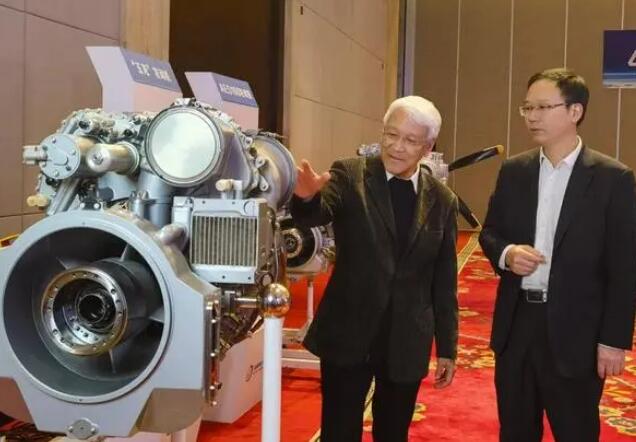
It is the first product in China with international competitiveness, fully independent intellectual property rights, and technological level comparable to the international fourth generation advanced civil engine.
"It is necessary to build a Chinese brand of civil aviation engines, make the most advanced engines, and let Chinese aircraft use a strong" Chinese heart "!" Yin Zeyong, an academician of the CAE Member and the former director of the China Aviation Development Science and Technology Commission, said in an interview with reporters of Science and Technology Daily a few days ago.
China's aviation engine industry has made significant progress
Reporter: Aircraft engines are known as the "crown jewel" of modern industry. Which countries in the world are capable of developing advanced aircraft engines?
Yin Zeyong: Currently, the United States, Russia, the United Kingdom, France, and China are capable of developing advanced aircraft engines. The aviation engine industry of New China was born in the flames of the Korean War, relying on self-improvement. Through the unremitting efforts of generations of aviation engine professionals, China's aviation engine industry has grown from scratch, from small to large, from weak to strong, and has achieved the research and production of advanced aviation engine series products such as turbojet, turbofan, turboshaft, and turboprop.
Reporter: What is the current development status of China's aviation engine industry? What representative products have emerged in recent years?
Yin Zeyong: The Party and the state attach great importance to the development of the aviation engine industry. On September 1, 2023, General Secretary Xi Jinping specifically replied to the employees of the "Li Zhiqiang Class" of China Aviation Industry Corporation, stating that "in recent years, China's aviation engine industry has made significant progress and has initially explored a new path of independent innovation and development. This is a highly summarized and commendable achievement in the aviation engine industry.
In recent years, aviation engines have made significant progress. In terms of civilian engines, in recent years, AVIC has exhibited commercial engines with large bypass ratio turbofans such as CJ (Changjiang) 1000A and CJ2000, as well as turboshaft and turboprop navigation power engines such as AES100 and AEP100, and various other new engines at air shows. These are concrete manifestations of the significant progress made in China's aviation engine industry.
Reporter: At what level are these engines you mentioned?
Yin Zeyong: Taking the Yangtze River series engines, which are of great concern to Chinese people, as an example. I am the first chief designer of this series of engines. At the beginning of the project, my team and I aimed to benchmark against world-class engines and create the most advanced ones. After years of effort, significant progress has been made in this series of engines.
Reporter: What specific aircraft are equipped with the Yangtze River series engines?
Yin Zeyong: The CJ1000A engine can meet the power requirements of 150 seat single aisle aircraft and will be a strong "Chinese heart" for commercial aircraft. The CJ2000 engine is aimed at equipping dual channel long-range wide body passenger aircraft. These two types of large bypass ratio engines have completely independent intellectual property rights, low fuel consumption, low emissions, low noise, high reliability, long service life, and can also be developed through improvement and modification series.
Persist unwaveringly in the concept of independent research and development
Reporter: There used to be a saying that 'one generation, one type of aircraft engine'. Why does it take so long to develop an engine?
Yin Zeyong: Developing aviation engines is a complex system engineering that integrates the latest achievements in modern science and technology, including aerodynamics, combustion, structural strength, control, machinery, materials, and more. The requirements for using the engine are also particularly demanding. The engine needs to work reliably for a long time in complex environments such as high temperature, high altitude, plateau, and salt spray. Its design, manufacturing, and testing workload is enormous, resulting in a long development cycle.
Reporter: With the emergence of new mechanisms and technologies, will the development cycle of engines in China be shortened?
Yin Zeyong: The pace of independent research and development of aircraft engines in China is constantly accelerating. Especially in 2016, after the approval of the establishment of AVIC by the Party and the state, many key core technologies have achieved breakthroughs.
What I deeply understand is that all members of the research and development front faced difficulties head-on, dared to work hard, and adopted many innovative ideas and methods.
For example, we focus on strengthening the research of applied basic theories, shared technologies, and model pre research, and closely integrate them with model development; Strengthen the research and development of critical components and accessories such as blades, discs, control systems, bearings, etc; Strengthen the construction of experimental capabilities, production capabilities, and support capabilities. Our work is practical and effective, ensuring a significant improvement in engine technology and a significant reduction in development cycles.

Yin Zeyong, Academician of the CAE Member: To be the most advanced engine
03 Sep, 2025
At present, the 1000 kW AES100 civil turboshaft engine independently developed by China Aero Engine Group Co., Ltd. (hereinafter referred to as AVIC) is making the final sprint for this year's independent airworthiness certification.

It is the first product in China with international competitiveness, fully independent intellectual property rights, and technological level comparable to the international fourth generation advanced civil engine.
"It is necessary to build a Chinese brand of civil aviation engines, make the most advanced engines, and let Chinese aircraft use a strong" Chinese heart "!" Yin Zeyong, an academician of the CAE Member and the former director of the China Aviation Development Science and Technology Commission, said in an interview with reporters of Science and Technology Daily a few days ago.
China's aviation engine industry has made significant progress
Reporter: Aircraft engines are known as the "crown jewel" of modern industry. Which countries in the world are capable of developing advanced aircraft engines?
Yin Zeyong: Currently, the United States, Russia, the United Kingdom, France, and China are capable of developing advanced aircraft engines. The aviation engine industry of New China was born in the flames of the Korean War, relying on self-improvement. Through the unremitting efforts of generations of aviation engine professionals, China's aviation engine industry has grown from scratch, from small to large, from weak to strong, and has achieved the research and production of advanced aviation engine series products such as turbojet, turbofan, turboshaft, and turboprop.
Reporter: What is the current development status of China's aviation engine industry? What representative products have emerged in recent years?
Yin Zeyong: The Party and the state attach great importance to the development of the aviation engine industry. On September 1, 2023, General Secretary Xi Jinping specifically replied to the employees of the "Li Zhiqiang Class" of China Aviation Industry Corporation, stating that "in recent years, China's aviation engine industry has made significant progress and has initially explored a new path of independent innovation and development. This is a highly summarized and commendable achievement in the aviation engine industry.
In recent years, aviation engines have made significant progress. In terms of civilian engines, in recent years, AVIC has exhibited commercial engines with large bypass ratio turbofans such as CJ (Changjiang) 1000A and CJ2000, as well as turboshaft and turboprop navigation power engines such as AES100 and AEP100, and various other new engines at air shows. These are concrete manifestations of the significant progress made in China's aviation engine industry.
Reporter: At what level are these engines you mentioned?
Yin Zeyong: Taking the Yangtze River series engines, which are of great concern to Chinese people, as an example. I am the first chief designer of this series of engines. At the beginning of the project, my team and I aimed to benchmark against world-class engines and create the most advanced ones. After years of effort, significant progress has been made in this series of engines.
Reporter: What specific aircraft are equipped with the Yangtze River series engines?
Yin Zeyong: The CJ1000A engine can meet the power requirements of 150 seat single aisle aircraft and will be a strong "Chinese heart" for commercial aircraft. The CJ2000 engine is aimed at equipping dual channel long-range wide body passenger aircraft. These two types of large bypass ratio engines have completely independent intellectual property rights, low fuel consumption, low emissions, low noise, high reliability, long service life, and can also be developed through improvement and modification series.
Persist unwaveringly in the concept of independent research and development
Reporter: There used to be a saying that 'one generation, one type of aircraft engine'. Why does it take so long to develop an engine?
Yin Zeyong: Developing aviation engines is a complex system engineering that integrates the latest achievements in modern science and technology, including aerodynamics, combustion, structural strength, control, machinery, materials, and more. The requirements for using the engine are also particularly demanding. The engine needs to work reliably for a long time in complex environments such as high temperature, high altitude, plateau, and salt spray. Its design, manufacturing, and testing workload is enormous, resulting in a long development cycle.
Reporter: With the emergence of new mechanisms and technologies, will the development cycle of engines in China be shortened?
Yin Zeyong: The pace of independent research and development of aircraft engines in China is constantly accelerating. Especially in 2016, after the approval of the establishment of AVIC by the Party and the state, many key core technologies have achieved breakthroughs.
What I deeply understand is that all members of the research and development front faced difficulties head-on, dared to work hard, and adopted many innovative ideas and methods.
For example, we focus on strengthening the research of applied basic theories, shared technologies, and model pre research, and closely integrate them with model development; Strengthen the research and development of critical components and accessories such as blades, discs, control systems, bearings, etc; Strengthen the construction of experimental capabilities, production capabilities, and support capabilities. Our work is practical and effective, ensuring a significant improvement in engine technology and a significant reduction in development cycles.