Empowering Urban Renewal with International Standards: Digital Technologies Tackle Complex Challenges for a Sustainable Future
04 May, 2026

It has been proven that urban renewal serves as a powerful solution to a wide range of urban challenges, yet very few cities have truly put this concept into practice. For many cities, urban renewal is overly complex. As a result, the practice of expanding urban boundaries by developing undeveloped greenfield sites and constructing new buildings continues unabated. This consumes vast amounts of valuable resources and leads to irreversible land use occupation. Digital technologies can help cities overcome obstacles in urban renewal, revitalize urban landscapes, curb land expansion, meet stakeholder expectations, and contribute to building a more sustainable world.
A recent United Nations report points out that by 2050, two-thirds of global population growth is expected to be concentrated in cities. The number of megacities — metropolitan areas with a population of 10 million or more — will continue to rise, while the proportion of rural populations will further decline, with the exception of Sub-Saharan Africa. Nevertheless, the majority of people live in small and medium-sized cities. The real challenge lies not in how fast these urban populations grow, but in the rapid increase in the number of cities, which has already doubled compared with five decades ago.Even today, approximately 2.8 billion people worldwide suffer from inadequate housing in one form or another. Urban residents living in substandard housing are more vulnerable to the impacts of climate change. Air quality in numerous cities fails to meet World Health Organization guideline limits — hardly surprising, given that cities account for 70% of global greenhouse gas emissions and generate billions of tons of waste annually. Furthermore, relentless urban sprawl exacerbates biodiversity loss and ecosystem degradation.
How, then, can we manage this urban transformation and reserve clean breathing space for both residents and the planet? Ultimately, the answer lies in the first principle of sustainability: before building anything new, make the most of what already exists. In urban planning circles, there is a well-known adage: The greenest city is the one never built. Urban renewal offers an effective starting point. By transforming underused, vacant or dilapidated urban areas into attractive and livable communities, renewal projects can significantly enhance residents’ quality of life while delivering greater long-term sustainability.
Some cities are already embracing this approach, particularly in Europe. The European Green Deal has set the target of achieving net zero land take by 2050.
For example, in the United Kingdom, a regeneration project in London’s King’s Cross has converted disused warehouses and railway land into a mixed-use community with thousands of homes, two schools and a university. Large-scale urban renewal in Manchester has attracted major institutions such as the BBC to set up regional headquarters in the city. Liverpool’s urban regeneration focuses on revitalizing its derelict waterfront and inner-city areas, driving profound economic, physical and cultural transformation, and helping the city transition from post-industrial decline to renewed growth and global recognition.
In Johannesburg, South Africa, an Urban Improvement Zone initiative focuses on upgrading safety, sanitation, maintenance and public facilities in targeted communities, resulting in a substantial drop in crime rates. The project has proven so successful that other cities across South Africa have followed suit.
Urban renewal also delivers strong economic value. According to recent research, brownfield development not only helps ease the housing crisis but also generates greater social value, often raising property values and boosting tax revenues. More importantly, extensive studies show that increased population density reduces per capita carbon emissions thanks to economies of scale.
Why, then, do more cities not follow this path? Urban renewal is often far more complex than new greenfield development. It requires addressing existing constraints and diverse stakeholder demands, bringing greater uncertainty into the process. In addition, numerous variables must be considered: land ownership, the condition of existing buildings and infrastructure, and funding sources — not to mention reconciling the interests of all stakeholders. Given the large number of parties typically involved, including municipal authorities, landowners, developers, contractors and residents, reaching consensus can be extremely difficult. Return on investment is harder to calculate, and the type and quantity of required resources are also difficult to define. This heightened uncertainty makes it harder to attract investors and forge collective agreement.
Digital and computational technologies, however, can help eliminate such uncertainties and make urban renewal projects more feasible and appealing. The key lies in cities fully leveraging these innovative tools. Current and emerging digital solutions enable virtual modeling of countless outcomes and scenarios even before construction begins.
With sensors, artificial intelligence, digital twins and the urban metaverse, real-time monitoring, scenario simulation and evidence-based evaluation can be efficiently conducted. The entire urban renewal process can be digitally modeled, allowing all stakeholders to clearly visualize project layouts and the operation of various functional elements. This makes it possible to assess projects’ impacts on traffic routes, energy consumption, and the balance between commercial and residential spaces.For instance, in extremely hot cities, solar paths and wind patterns can be analyzed to optimize architectural layouts and open spaces for better natural ventilation and shading. Pedestrian travel patterns can be simulated to site retail outlets strategically and boost business performance. With smart sensors and AI analytics, rainwater runoff can be predicted to design flood prevention measures and improve post-disaster recovery planning. Similarly, such technologies can identify areas prone to fire and landslide risks.
Many cities are already adopting these technologies. Shanghai began building a full-scale urban digital twin in 2020, covering infrastructure, transportation, public services and utilities. In 2023, blockchain was integrated to manage contracts and secure records of any infrastructure modifications, enabling not only scenario simulation but also early risk detection.
Songdo International Business District in South Korea serves as another exemplary case. Built on reclaimed land across 1,500 acres (approximately 607 hectares), the district extensively deploys digital technologies and sensors to monitor traffic flow, energy consumption and other key indicators. Real-time data is used to manage public services including security, utilities and transportation, improving operational efficiency, cutting resource consumption and reducing costs. An automated pneumatic waste collection system eliminates the need for garbage trucks, while its water recycling system reduces overall water consumption by 40%.
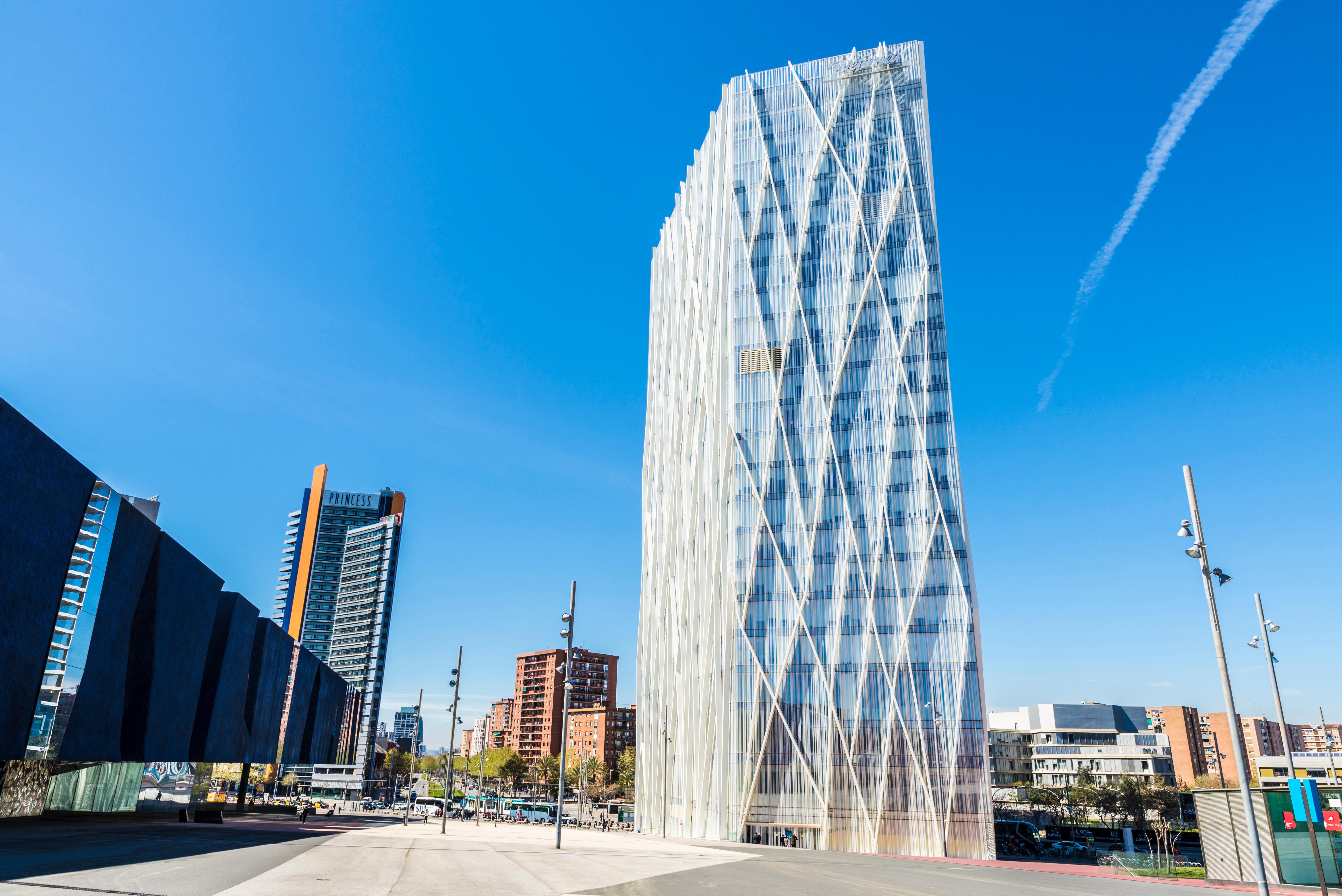
Barcelona’s 22@ Innovation District represents another highly successful urban renewal model. Over 70% of old industrial land has been redeveloped into a technology and innovation hub, complemented by new residential compounds and public spaces. Digital tools monitor resource usage and traffic flow in real time to optimize urban operations. The city has also launched an Open City Dashboard, allowing residents to provide feedback on public projects and vote on local initiatives. The district has attracted massive international investment and created nearly 100,000 jobs. By drawing in startups, multinational corporations and research institutions, it has helped Barcelona build a new reputation beyond tourism and traditional manufacturing.
All of these efforts can be underpinned by international standards — not only to ensure technological reliability, but also to guarantee interoperability across systems. The newly established IEC/ISO Joint Technical Committee for Smart Cities (JTC 4) integrates multiple existing committees to foster more connected and forward-looking thinking for future urban development. Its work will enable such urban renewal projects to be replicated and scaled up globally, provide a common technical language for all stakeholders, and reassure investors that baseline quality and safety standards are being upheld.

Empowering Urban Renewal with International Standards: Digital Technologies Tackle Complex Challenges for a Sustainable Future
04 May, 2026

It has been proven that urban renewal serves as a powerful solution to a wide range of urban challenges, yet very few cities have truly put this concept into practice. For many cities, urban renewal is overly complex. As a result, the practice of expanding urban boundaries by developing undeveloped greenfield sites and constructing new buildings continues unabated. This consumes vast amounts of valuable resources and leads to irreversible land use occupation. Digital technologies can help cities overcome obstacles in urban renewal, revitalize urban landscapes, curb land expansion, meet stakeholder expectations, and contribute to building a more sustainable world.
A recent United Nations report points out that by 2050, two-thirds of global population growth is expected to be concentrated in cities. The number of megacities — metropolitan areas with a population of 10 million or more — will continue to rise, while the proportion of rural populations will further decline, with the exception of Sub-Saharan Africa. Nevertheless, the majority of people live in small and medium-sized cities. The real challenge lies not in how fast these urban populations grow, but in the rapid increase in the number of cities, which has already doubled compared with five decades ago.Even today, approximately 2.8 billion people worldwide suffer from inadequate housing in one form or another. Urban residents living in substandard housing are more vulnerable to the impacts of climate change. Air quality in numerous cities fails to meet World Health Organization guideline limits — hardly surprising, given that cities account for 70% of global greenhouse gas emissions and generate billions of tons of waste annually. Furthermore, relentless urban sprawl exacerbates biodiversity loss and ecosystem degradation.
How, then, can we manage this urban transformation and reserve clean breathing space for both residents and the planet? Ultimately, the answer lies in the first principle of sustainability: before building anything new, make the most of what already exists. In urban planning circles, there is a well-known adage: The greenest city is the one never built. Urban renewal offers an effective starting point. By transforming underused, vacant or dilapidated urban areas into attractive and livable communities, renewal projects can significantly enhance residents’ quality of life while delivering greater long-term sustainability.
Some cities are already embracing this approach, particularly in Europe. The European Green Deal has set the target of achieving net zero land take by 2050.
For example, in the United Kingdom, a regeneration project in London’s King’s Cross has converted disused warehouses and railway land into a mixed-use community with thousands of homes, two schools and a university. Large-scale urban renewal in Manchester has attracted major institutions such as the BBC to set up regional headquarters in the city. Liverpool’s urban regeneration focuses on revitalizing its derelict waterfront and inner-city areas, driving profound economic, physical and cultural transformation, and helping the city transition from post-industrial decline to renewed growth and global recognition.
In Johannesburg, South Africa, an Urban Improvement Zone initiative focuses on upgrading safety, sanitation, maintenance and public facilities in targeted communities, resulting in a substantial drop in crime rates. The project has proven so successful that other cities across South Africa have followed suit.
Urban renewal also delivers strong economic value. According to recent research, brownfield development not only helps ease the housing crisis but also generates greater social value, often raising property values and boosting tax revenues. More importantly, extensive studies show that increased population density reduces per capita carbon emissions thanks to economies of scale.
Why, then, do more cities not follow this path? Urban renewal is often far more complex than new greenfield development. It requires addressing existing constraints and diverse stakeholder demands, bringing greater uncertainty into the process. In addition, numerous variables must be considered: land ownership, the condition of existing buildings and infrastructure, and funding sources — not to mention reconciling the interests of all stakeholders. Given the large number of parties typically involved, including municipal authorities, landowners, developers, contractors and residents, reaching consensus can be extremely difficult. Return on investment is harder to calculate, and the type and quantity of required resources are also difficult to define. This heightened uncertainty makes it harder to attract investors and forge collective agreement.
Digital and computational technologies, however, can help eliminate such uncertainties and make urban renewal projects more feasible and appealing. The key lies in cities fully leveraging these innovative tools. Current and emerging digital solutions enable virtual modeling of countless outcomes and scenarios even before construction begins.
With sensors, artificial intelligence, digital twins and the urban metaverse, real-time monitoring, scenario simulation and evidence-based evaluation can be efficiently conducted. The entire urban renewal process can be digitally modeled, allowing all stakeholders to clearly visualize project layouts and the operation of various functional elements. This makes it possible to assess projects’ impacts on traffic routes, energy consumption, and the balance between commercial and residential spaces.For instance, in extremely hot cities, solar paths and wind patterns can be analyzed to optimize architectural layouts and open spaces for better natural ventilation and shading. Pedestrian travel patterns can be simulated to site retail outlets strategically and boost business performance. With smart sensors and AI analytics, rainwater runoff can be predicted to design flood prevention measures and improve post-disaster recovery planning. Similarly, such technologies can identify areas prone to fire and landslide risks.
Many cities are already adopting these technologies. Shanghai began building a full-scale urban digital twin in 2020, covering infrastructure, transportation, public services and utilities. In 2023, blockchain was integrated to manage contracts and secure records of any infrastructure modifications, enabling not only scenario simulation but also early risk detection.
Songdo International Business District in South Korea serves as another exemplary case. Built on reclaimed land across 1,500 acres (approximately 607 hectares), the district extensively deploys digital technologies and sensors to monitor traffic flow, energy consumption and other key indicators. Real-time data is used to manage public services including security, utilities and transportation, improving operational efficiency, cutting resource consumption and reducing costs. An automated pneumatic waste collection system eliminates the need for garbage trucks, while its water recycling system reduces overall water consumption by 40%.
Barcelona’s 22@ Innovation District represents another highly successful urban renewal model. Over 70% of old industrial land has been redeveloped into a technology and innovation hub, complemented by new residential compounds and public spaces. Digital tools monitor resource usage and traffic flow in real time to optimize urban operations. The city has also launched an Open City Dashboard, allowing residents to provide feedback on public projects and vote on local initiatives. The district has attracted massive international investment and created nearly 100,000 jobs. By drawing in startups, multinational corporations and research institutions, it has helped Barcelona build a new reputation beyond tourism and traditional manufacturing.
All of these efforts can be underpinned by international standards — not only to ensure technological reliability, but also to guarantee interoperability across systems. The newly established IEC/ISO Joint Technical Committee for Smart Cities (JTC 4) integrates multiple existing committees to foster more connected and forward-looking thinking for future urban development. Its work will enable such urban renewal projects to be replicated and scaled up globally, provide a common technical language for all stakeholders, and reassure investors that baseline quality and safety standards are being upheld.