“Marking the 40th Anniversary of the Declaration on the Right to Development: Addressing Human Rights Challenges with Scientific Solutions” Side Event Held in Geneva
29 Mar, 2026
— Dr. Peng Jianbiao, CEO of the United Nations Consultative Status of CIAPST and Chairman of IARIS, Attends and Speaks at the Event
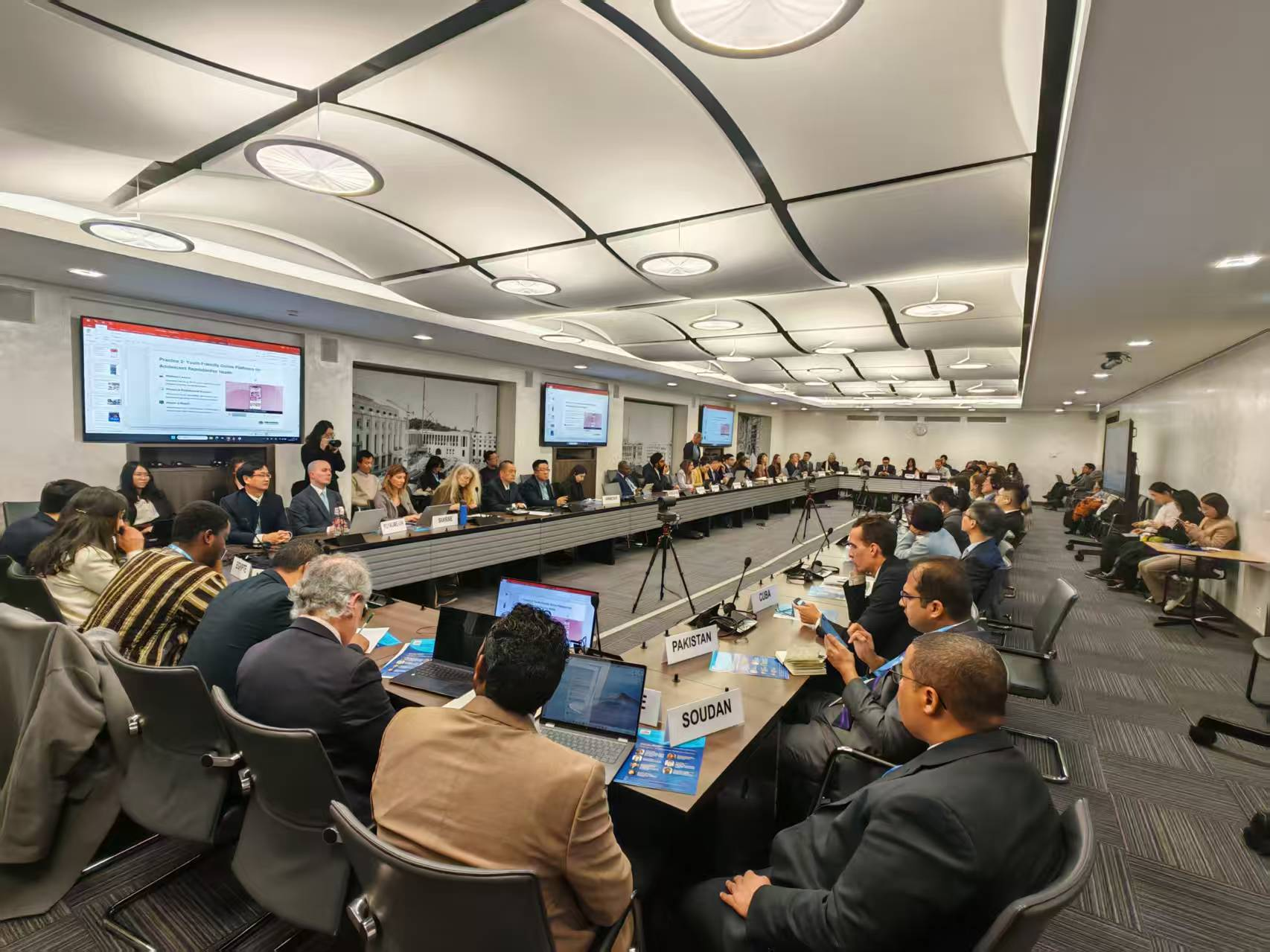
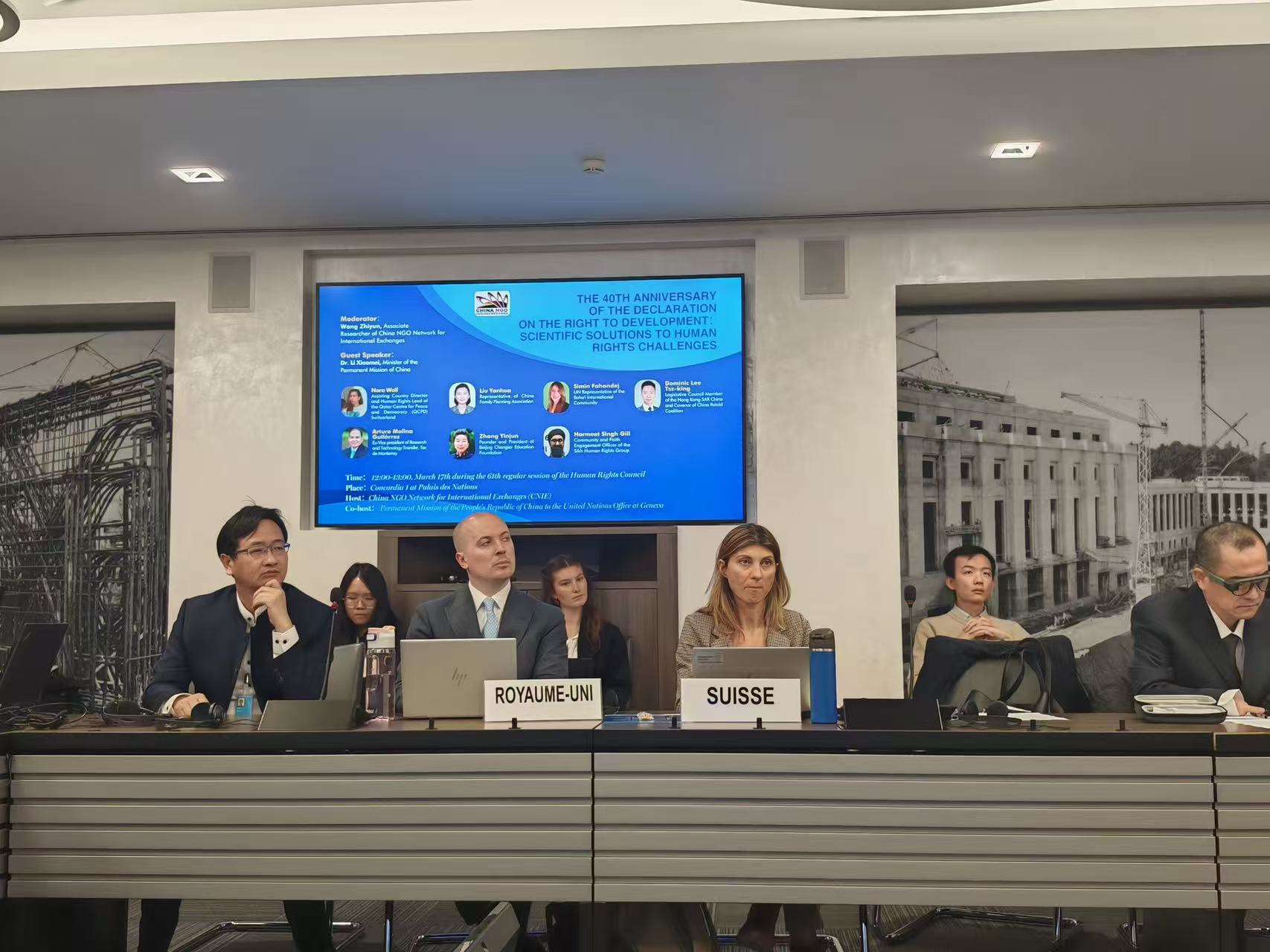
GENEVA, March 18 (Xinhua) — On the sidelines of the 61st session of the United Nations Human Rights Council, the China NGO Network for International Exchanges, in collaboration with the Permanent Mission of China to the UN Office in Geneva, co-hosted a side event on March 17 themed “Marking the 40th Anniversary of the Declaration on the Right to Development: Addressing Human Rights Challenges with Scientific Solutions.” Nearly 100 Chinese and international participants gathered to explore how civil society organizations can use digital technologies to safeguard the right to development and play a role in addressing global challenges such as climate change, public health crises, and the digital divide, as well as in promoting solutions to discrimination and inequality.
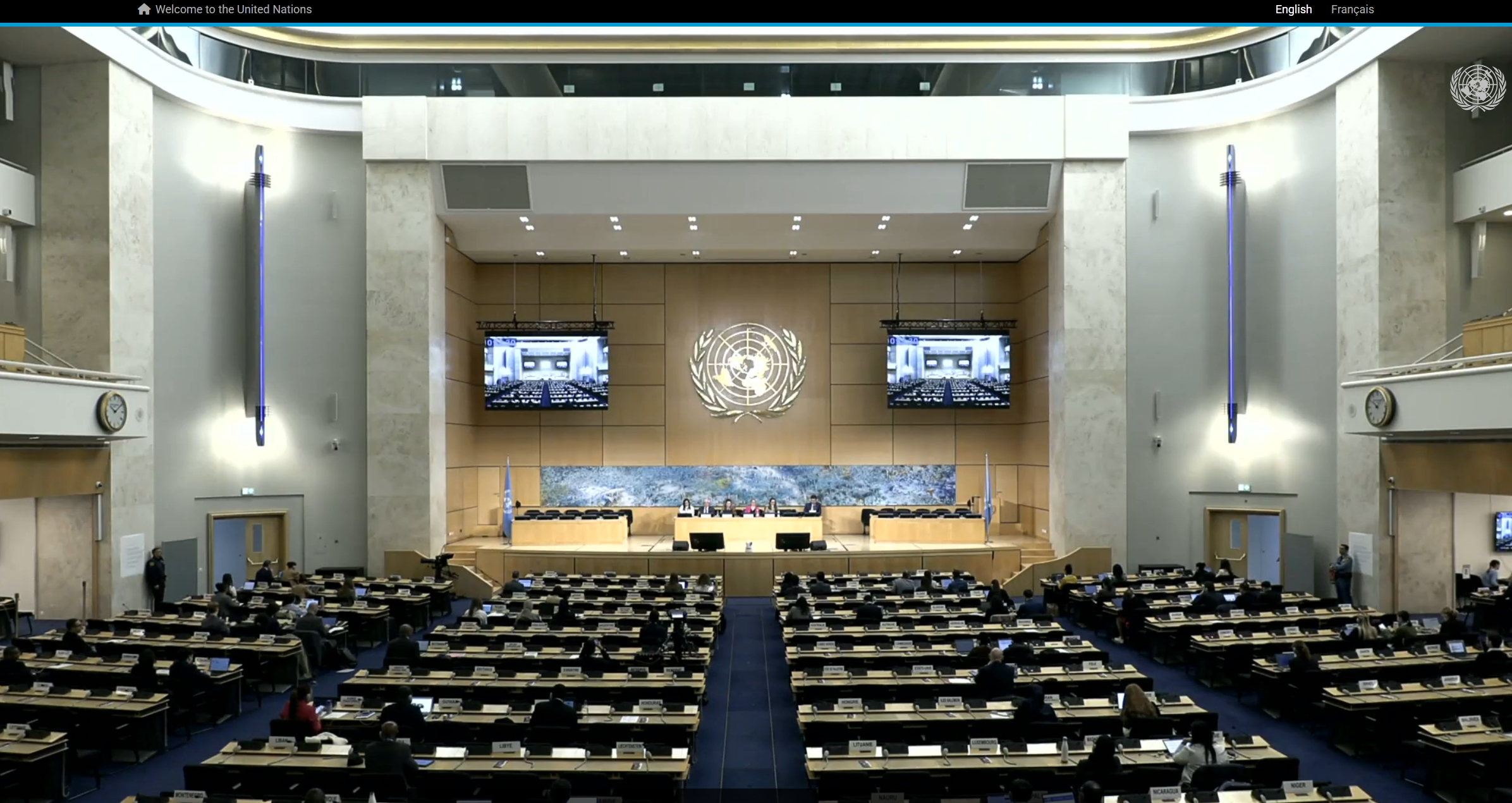
The event was attended by representatives from more than 20 countries, including Australia, the United Kingdom, Belgium, Russia, Switzerland, and Vietnam, along with heads of non-governmental organizations and experts and scholars from various countries.
Li Xiaomei, Deputy Head of the Chinese Delegation to the 61st Session of the UN Human Rights Council, stated that China attaches great importance to promoting and protecting the right to development. China has introduced resolutions on “The Role of Development in the Promotion of Human Rights” and “Accessibility for All to the Enjoyment of Human Rights” at the Human Rights Council, calling on all parties to pay greater attention to the right to development and to promote inclusive and universally beneficial development. On the occasion of the 40th anniversary of the adoption of the Declaration on the Right to Development, China urges all countries to renew their commitments, adhere to a people-centered approach, uphold fairness and justice, pursue true multilateralism, further harness the contribution of development to the enjoyment of all human rights, and work together to build a community with a shared future for mankind.
Speakers shared in-depth practical experiences and reflections on the role of science and technology in human rights protection and development from various perspectives. A representative of the Doha International Center for Interfaith Dialogue noted that joint efforts by countries to find scientific solutions to human rights challenges are increasingly important. He commended China’s constructive role in promoting dialogue on development cooperation and technological innovation within a multilateral framework, particularly its commitment to expanding the ability of developing countries and regions to access digital infrastructure and technology. A representative of the Baha’i International Community pointed out that scientific and technological innovation holds great potential for addressing major global challenges and enhancing human well-being, and that equality, inclusiveness, and the protection of minority groups should be strengthened.
A representative of the China Family Planning Association introduced the organization’s practices and explorations in promoting reproductive health and the protection of people’s livelihood and human rights.
Dr. Peng Jianbiao, CEO of the United Nations Consultative Status of the China International Association for the Promotion of Science and Technology (CIAPST) and Chairman of the International Regional Innovation and Standardization Alliance (IARIS), spoke on behalf of CIAPST. He shared concrete practices in safeguarding the rights to health, development, and a clean environment by promoting energy technology innovation and vigorously developing clean energy technologies, demonstrating the Alliance’s active role in advancing the interconnection of international standards and supporting sustainable development through standardization.
A representative from the Hong Kong region of China presented a case study on the use of artificial intelligence‑driven medical diagnostics and epidemic prevention technologies to serve the public.
Participants also exchanged views on topics such as the role of technology in protecting the rights of persons with disabilities, paying attention to the right to development of people in war‑torn regions, and enhancing multi‑stakeholder collaboration in the process of human rights protection.

“Marking the 40th Anniversary of the Declaration on the Right to Development: Addressing Human Rights Challenges with Scientific Solutions” Side Event Held in Geneva
29 Mar, 2026
— Dr. Peng Jianbiao, CEO of the United Nations Consultative Status of CIAPST and Chairman of IARIS, Attends and Speaks at the Event
GENEVA, March 18 (Xinhua) — On the sidelines of the 61st session of the United Nations Human Rights Council, the China NGO Network for International Exchanges, in collaboration with the Permanent Mission of China to the UN Office in Geneva, co-hosted a side event on March 17 themed “Marking the 40th Anniversary of the Declaration on the Right to Development: Addressing Human Rights Challenges with Scientific Solutions.” Nearly 100 Chinese and international participants gathered to explore how civil society organizations can use digital technologies to safeguard the right to development and play a role in addressing global challenges such as climate change, public health crises, and the digital divide, as well as in promoting solutions to discrimination and inequality.

The event was attended by representatives from more than 20 countries, including Australia, the United Kingdom, Belgium, Russia, Switzerland, and Vietnam, along with heads of non-governmental organizations and experts and scholars from various countries.
Li Xiaomei, Deputy Head of the Chinese Delegation to the 61st Session of the UN Human Rights Council, stated that China attaches great importance to promoting and protecting the right to development. China has introduced resolutions on “The Role of Development in the Promotion of Human Rights” and “Accessibility for All to the Enjoyment of Human Rights” at the Human Rights Council, calling on all parties to pay greater attention to the right to development and to promote inclusive and universally beneficial development. On the occasion of the 40th anniversary of the adoption of the Declaration on the Right to Development, China urges all countries to renew their commitments, adhere to a people-centered approach, uphold fairness and justice, pursue true multilateralism, further harness the contribution of development to the enjoyment of all human rights, and work together to build a community with a shared future for mankind.
Speakers shared in-depth practical experiences and reflections on the role of science and technology in human rights protection and development from various perspectives. A representative of the Doha International Center for Interfaith Dialogue noted that joint efforts by countries to find scientific solutions to human rights challenges are increasingly important. He commended China’s constructive role in promoting dialogue on development cooperation and technological innovation within a multilateral framework, particularly its commitment to expanding the ability of developing countries and regions to access digital infrastructure and technology. A representative of the Baha’i International Community pointed out that scientific and technological innovation holds great potential for addressing major global challenges and enhancing human well-being, and that equality, inclusiveness, and the protection of minority groups should be strengthened.
A representative of the China Family Planning Association introduced the organization’s practices and explorations in promoting reproductive health and the protection of people’s livelihood and human rights.
Dr. Peng Jianbiao, CEO of the United Nations Consultative Status of the China International Association for the Promotion of Science and Technology (CIAPST) and Chairman of the International Regional Innovation and Standardization Alliance (IARIS), spoke on behalf of CIAPST. He shared concrete practices in safeguarding the rights to health, development, and a clean environment by promoting energy technology innovation and vigorously developing clean energy technologies, demonstrating the Alliance’s active role in advancing the interconnection of international standards and supporting sustainable development through standardization.

A representative from the Hong Kong region of China presented a case study on the use of artificial intelligence‑driven medical diagnostics and epidemic prevention technologies to serve the public.
Participants also exchanged views on topics such as the role of technology in protecting the rights of persons with disabilities, paying attention to the right to development of people in war‑torn regions, and enhancing multi‑stakeholder collaboration in the process of human rights protection.